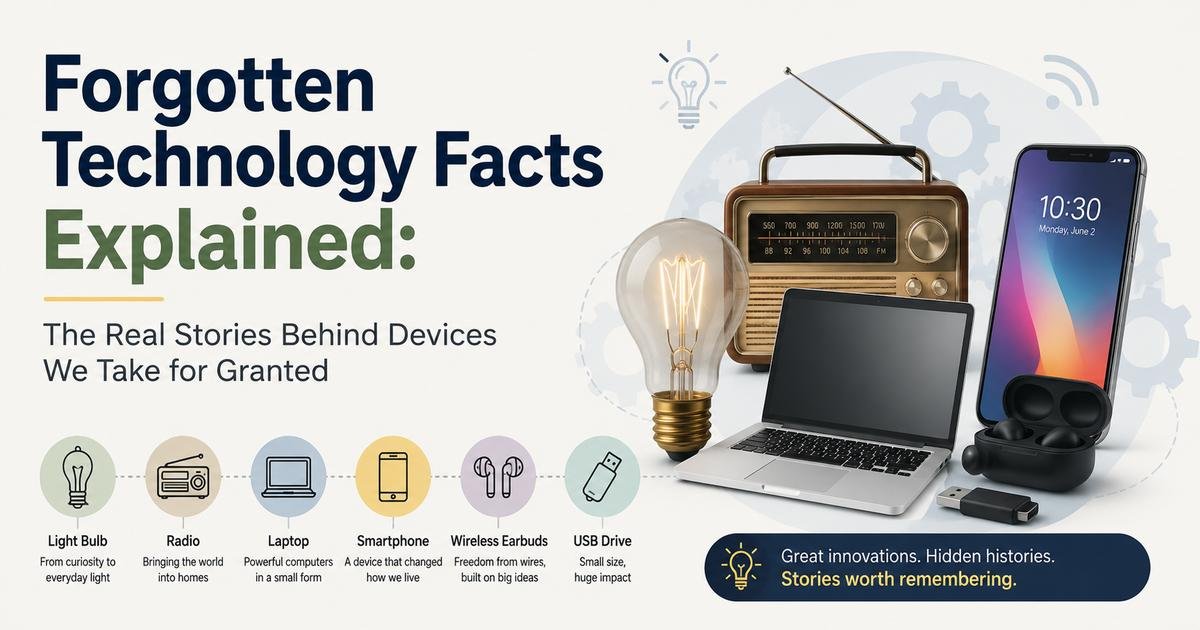
Forgotten Technology Facts Explained: The Real Stories Behind Devices We Take for Granted

My grandfather kept an old rotary phone in his garage for decades. Long after the house already had a cordless one sitting right there in the kitchen. And every single time I visited, he’d tell me some version of the same story: how the dial worked, the pulses it sent down the line, like it was a genuine engineering marvel and not just some old phone gathering dust next to his lawn mower. I rolled my eyes as a kid. He wasn’t wrong, though. Forgotten in a garage somewhere.
So here’s some of that history. The real version. Not the sanitized trivia list stuff that gets repeated everywhere without much depth behind it.
The Internet Almost Didn’t Look Anything Like This
Most people assume the internet started as some clean, deliberate design for global communication. Reality’s messier. Way more specific. The early network that eventually became the internet was built mainly to let a handful of research computers at different universities and defense institutions share resources, stay connected even if part of the network got physically knocked out. Real concern at the time, given the geopolitical tension going on.
The Mouse Predates Home Computers by Decades
A working mouse prototype existed years before home computers were remotely common. Demonstrated publicly in a presentation people now call the “Mother of All Demos,” which also showed off video conferencing, hypertext links, real time collaborative editing. All in one single presentation. Decades before any of it became normal for regular people.
The original mouse was carved from wood, with two metal wheels underneath instead of a ball or optical sensor. Took roughly two more decades before mice became standard. Says something about how far ahead of actual adoption a genuinely good idea can sit before the rest of the tech and the market catches up.
Floppy Disks Weren’t Always Floppy or Small
Earliest floppy disks were genuinely floppy. Flexible, bendable, and way bigger than the rigid, smaller ones a lot of people actually remember from the nineties. The original format was eight inches across, roughly a large dinner plate, storing a tiny fraction of what even a basic modern device holds now.
The rigid smaller version people picture when they hear the term came later, and even that held remarkably little, often under two megabytes. Today that wouldn’t hold a single decent photo. Let alone anything people casually share now without a second thought.
Text Messaging Was Never Meant to Be a Business
Text messaging, this massive essential part of daily life for billions of people now, started almost as an afterthought. A secondary feature bolted onto existing mobile networks. Not any deliberate flagship product anyone actually planned around.
Early messages had a small character limit, and that limit came from purely technical constraints of the network signaling system carrying them. Not any deliberate design choice made with user behavior in mind.
QWERTY Has a Genuinely Contested Origin Story
The common explanation for QWERTY claims it was designed to slow typists down, stopping mechanical typewriter arms from jamming when someone typed too fast for the mechanism.
That explanation, repeated constantly like fact, is actually more contested among historians than most people realize. The real story’s more complicated than the tidy version everyone repeats. Good example of how a plausible-sounding explanation spreads without actually being the full picture.
Early Consoles Were Considered a Genuinely Risky Bet
Home consoles are a massive industry now, but the earliest systems were a genuinely uncertain gamble, companies unsure whether people would pay for a device whose entire purpose was playing games at home instead of an arcade.
An industry crash in the early eighties nearly ended home gaming entirely. Partly a market flooded with low-quality games, partly just general consumer confusion about what was even worth buying. Took one specific company’s careful relaunch, strict quality control over approved games, to actually rebuild consumer confidence from what had looked, for a while, like a total collapse.
The Fax Machine Is Older Than the Telephone
Genuinely surprises people, this one. An early fax version existed before the telephone was invented. Developed for transmitting handwritten messages and simple images over telegraph lines, using a scanning mechanism that was pretty sophisticated for its era.
Existed in primitive but real, working form for decades before it became commercially practical. Took a lot more refinement, plus much broader telephone infrastructure, before fax machines became standard office equipment.
Early Digital Cameras Cost More Than Most Cars
The earliest digital camera prototypes cost new car at the time. Captured images at a resolution so low by modern standards that a single early photo would barely be recognizable as a photo compared to what a basic phone captures without any effort now.
Took roughly two more decades of steady refinement before digital cameras became affordable and practical enough for regular consumers to consider over traditional film, which had dominated for the better part of a century without serious competition.
Bluetooth Is Named After a Scandinavian King
Sounds made up. Isn’t. Bluetooth’s named after a tenth-century Scandinavian king known for uniting several warring tribes under one kingdom, chosen specifically because the technology itself was designed to unite different communication protocols and competing devices under one standard.
The actual logo, that stylized symbol everyone recognizes without ever thinking about what it means, is a combination of two ancient runic letters representing that king’s initials, merged into one symbol. Deliberate design choice. Not just some random shape a designer liked.
Why These Forgotten Details Actually Matter
Beyond simple trivia, understanding the messier real history behind familiar tech reveals something genuinely useful about how innovation actually works. Good ideas sit around for years, sometimes decades, before the right combination of cost, infrastructure, and genuine consumer readiness lets them take off and become part of everyday life. Final Thoughts
Forgotten technology facts aren’t just fun dinner party trivia, though they work well for that too, honestly. My grandfather’s rotary phone stories had more substance than I ever gave him credit for as a kid, rolling my eyes in that garage. Turns out most old tech has a story worth knowing, if anyone actually bothers digging into it instead of letting it gather dust somewhere, forgotten.




[…] comparing similar words across related languages, researchers can identify patterns that reveal shared origins. For example, many English words trace back to Latin, Greek, French, or […]