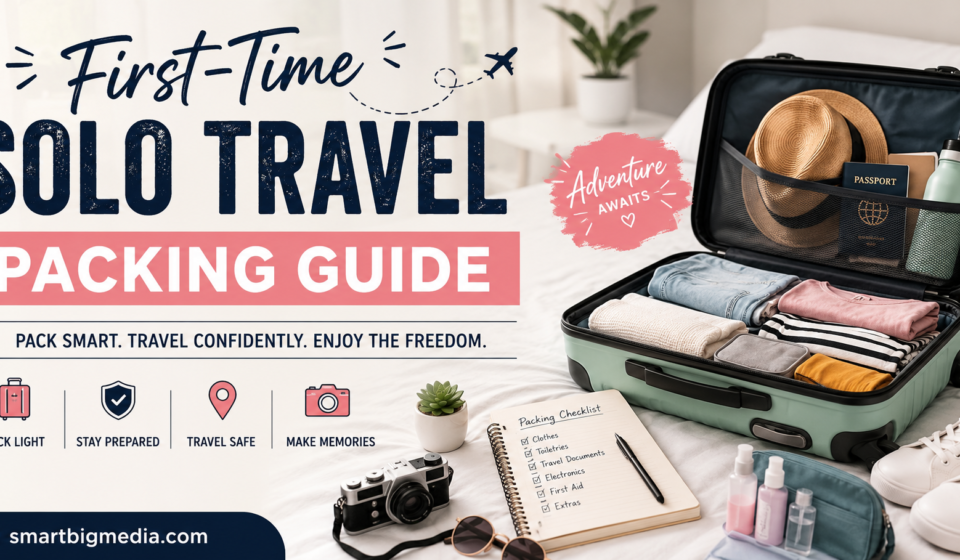

I packed for my first solo trip like I was preparing for a natural disaster. A first aid kit big enough for a small clinic, four “just in case” outfits, a second phone charger for the charger I already had two of, and a guidebook so thick it basically counted as carry-on weight on its own. I remember sitting on my bedroom floor at midnight, bag zipped, unzipped, rezipped three times, genuinely sweating over whether I’d packed “enough,” like enough was even a real, fixed number I could hit if I just tried hard enough.
It wasn’t. Nobody tells you that going in, but there’s no version of packing that removes the nervousness of traveling alone for the first time. The bag isn’t the thing that makes you feel ready. It just needs to hold what you actually need, not what your anxious brain thinks might theoretically happen in a worst-case scenario you’ve dreamed up at midnight.
This guide is what I wish someone had handed me before that first trip. Not a rigid list to follow exactly, more just the stuff that actually matters when there’s no one else there to hand you the charger you forgot or split the load of “who’s carrying the umbrella.”
Why Solo Travel Packing Feels So Different
Traveling with someone else, you split the burden without really noticing. Someone’s got the extra phone charger, someone else remembered the umbrella, and if you forget your toothpaste, well, you’ve got a travel buddy’s to borrow. Solo, all of that responsibility sits on one person. You.
That’s not actually a bad thing, to be clear, plenty of people find it genuinely freeing once they get past the first few hours of low-grade panic. But it does mean the packing has to be a little more deliberate, because there’s no backup plan built into your travel group. If you forget it, you don’t have it, full stop, until you can buy a replacement somewhere.
The flip side of that though — and this took me embarrassingly long to learn — is that you also don’t need to pack for anyone else’s preferences or habits. No compromise bag. No “well, they wanted to bring the big first aid kit so now we’re both carrying it.” Just your stuff, your call, your bag.
The Mental Shift Before the Physical Packing
You Can Buy Things There
This one sounds obvious written down but it wasn’t obvious to me at the time. Almost anywhere you’re going has stores. Toothpaste exists in other countries. Forgot a specific shampoo? There’s a version of it, or something close enough, basically everywhere on earth people live. Packing for “what if I can’t find X” is usually packing fear, not packing logic.
Heavy Bags Are a Solo Traveler’s Actual Enemy
With a travel partner, someone can watch the bags while you find a bathroom, or help hoist the suitcase up a set of stairs when the elevator’s broken, again. Alone, you’re doing all of that yourself, every time, for the whole trip. A bag that’s slightly too heavy stops being a minor annoyance and becomes something you’re wrestling with on every train platform, every hostel staircase, every cobblestone street that wasn’t built with rolling suitcases in mind.
Comfort Items Matter More, Not Less
This is the flip side of the “pack light” advice that a lot of guides skip over. Solo travel can get lonely in small, unexpected moments — a quiet hotel room on night three, an evening where you don’t have anyone to debrief the day with. A small comfort item, whatever that means for you, isn’t wasted space. It’s genuinely worth the room it takes up.
Documents and Essentials — the Non-Negotiables
The Basics
- Passport, plus a photocopy or photo of it stored separately from the physical one
- Visa documents if needed, printed, not just saved on your phone in case you lose signal or battery right when you need them
- Travel insurance details, saved offline somewhere you can access it
- A card that works internationally, and a backup card kept in a different bag or pocket than the first, just in case one gets lost or your bank flags it as suspicious activity and freezes it (this happens more than you’d expect on a first solo trip abroad)
- Some local currency, even a small amount, for the first few hours before you find an ATM
Something With Your Emergency Contacts
Not glamorous, easy to skip, genuinely important. A small card or note in your bag with a contact back home, plus any relevant medical info if that applies to you. Traveling alone means there’s no one there automatically to speak up for you if something goes wrong, so having this written down somewhere accessible, not just in your head, matters more than it would with a travel partner along.
Clothing: Fewer Choices, Less Stress
The Capsule Approach
This gets recommended constantly and for good reason — pick a small color palette that mixes and matches easily, rather than packing full separate outfits. Fewer decisions each morning, less bag space, and honestly less decision fatigue on a trip where you’re already making a hundred small decisions alone that you’d normally split with someone else.
A rough starting point for most trips: a handful of tops that all pair with the same two or three bottoms, one layer for temperature swings, sleepwear, and one slightly nicer outfit in case you end up somewhere unexpectedly dressy.
Laundry Changes the Math Completely
If your trip’s longer than about five days, laundry — whether that’s a laundromat, a hostel machine, or just handwashing a few items in a sink — genuinely changes how much you need to pack. You’re not packing for the whole trip’s worth of outfits, you’re packing for however many days until you can do a load of laundry, which is usually a much smaller number than people initially plan around.
Shoes, Kept Minimal
Two pairs is usually plenty for most trips. One comfortable, broken-in walking shoe, and one slightly nicer option if the trip calls for it. Solo travelers especially benefit from not overpacking shoes, since you’re the one carrying every extra pound up every staircase, no one else to hand a bag to for a minute.
Toiletries Without the Overkill
You genuinely don’t need the whole medicine cabinet. A pared-down kit covers most situations:
- Toothbrush, toothpaste, deodorant, whatever your basic daily routine actually requires
- Any prescription medication, in its original packaging, plus a little extra in case of delays
- A small first aid kit — bandages, pain relievers, something for an upset stomach — not a full clinic, just enough for minor stuff
- Sunscreen, if relevant to where you’re headed
- Hand sanitizer, small pack of tissues, the kind of thing that’s easy to forget but annoying to be without
Solo travel makes minor illness or discomfort feel bigger than it is, mostly because there’s no one there to hand you medicine or reassure you it’s not a big deal. A well-stocked but not excessive kit takes some of that edge off.
Safety and Peace of Mind Items
A Door Stop or Small Lock
Cheap, tiny, weighs almost nothing, and genuinely helps some solo travelers feel more secure in unfamiliar accommodation, especially in places where you’re not entirely sure how secure the room lock actually is. Doesn’t need to be elaborate, just something.
A Cross-Body Bag You Can Keep on You
Rather than a bag you set down and have to keep half-watching, something that stays on your body through crowded areas or transit means one less thing to actively monitor when you’re navigating somewhere new by yourself.
A Portable Charger, Genuinely Not Optional
Solo, your phone is doing everything — maps, translation, emergency contact, hotel booking, camera. Running out of battery mid-afternoon in an unfamiliar city alone is a very different problem than it would be with a travel partner who might have a working phone as backup. Bring the power bank. Charge it the night before every travel day.
Tech Worth Bringing (and What to Skip)
Phone charger, obviously, plus an adapter if you’re headed somewhere with different plugs. Headphones, especially useful for the inevitable stretches of solo transit time. A portable charger, already mentioned, worth repeating because it matters that much.
What you probably don’t need: a laptop, unless work genuinely requires it or you specifically plan to do some writing or editing on the trip. It’s extra weight, extra thing to keep track of and worry about losing, and most people who bring one “just in case” barely open it.
The Emotional Packing List Nobody Talks About
Something Familiar
A specific tea bag, a small photo, a playlist downloaded ahead of time, whatever gives you a small sense of home in an unfamiliar place. It sounds unnecessary until night three in a new city when you’re eating dinner alone and it’s quieter in your head than you expected it to be.
A Journal or Notebook
Doesn’t need to be for anything specific. Solo travel gives you a lot of unstructured thinking time, more than you’d get traveling with company, and having somewhere to put that down — even just a few lines a day — tends to make the trip feel more grounded, less like it’s slipping past you unprocessed.
Something to Read That Isn’t About Where You’re Going
A guidebook’s useful, sure, but bring one book that has nothing to do with the trip too. A quiet hour with a novel that has nothing to do with logistics or itineraries is a genuinely good reset when solo travel starts to feel like a constant string of decisions.
Final Bag Check Before You Leave
Go through it once, physically, not just mentally ticking things off while you’re distracted doing six other things. Documents, money, phone, charger — the stuff that actually derails a trip if it’s missing. Then the rest, clothes and toiletries and the small comfort items, checked against whatever list you made rather than trusted purely to memory.
Final Thoughts
That first solo trip I overpacked so badly for turned out fine, obviously, most overpacked first trips do. But by the third trip I’d cut the bag down by more than half and somehow felt more prepared, not less, because what was left was actually useful instead of just there for imaginary emergencies. The confidence doesn’t come from the size of the bag. It comes from realizing, usually somewhere around day two, that you can handle whatever comes up with a lot less than you thought you needed to bring.
Pack light, pack a few things that are just for you and don’t need to make logical sense to anyone else, and trust that most of what you forget, you can figure out once you’re actually there.



[…] business ends up with a folder called “Final_v2_actuallyfinal.docx” at some point. Nobody plans it that way. It just happens, one rushed save after another, and […]
[…] pulses it sent down the line, like it was a genuine engineering marvel and not just some old phone gathering dust next to his lawn mower. I rolled my eyes as a kid. He wasn’t wrong, though. Forgotten in a […]
[…] of body weight, which honestly isn’t much — found real, measurable drops in concentration, alertness, and short-term memory. Mood takes a hit too. Research on young women showed more reported fatigue […]