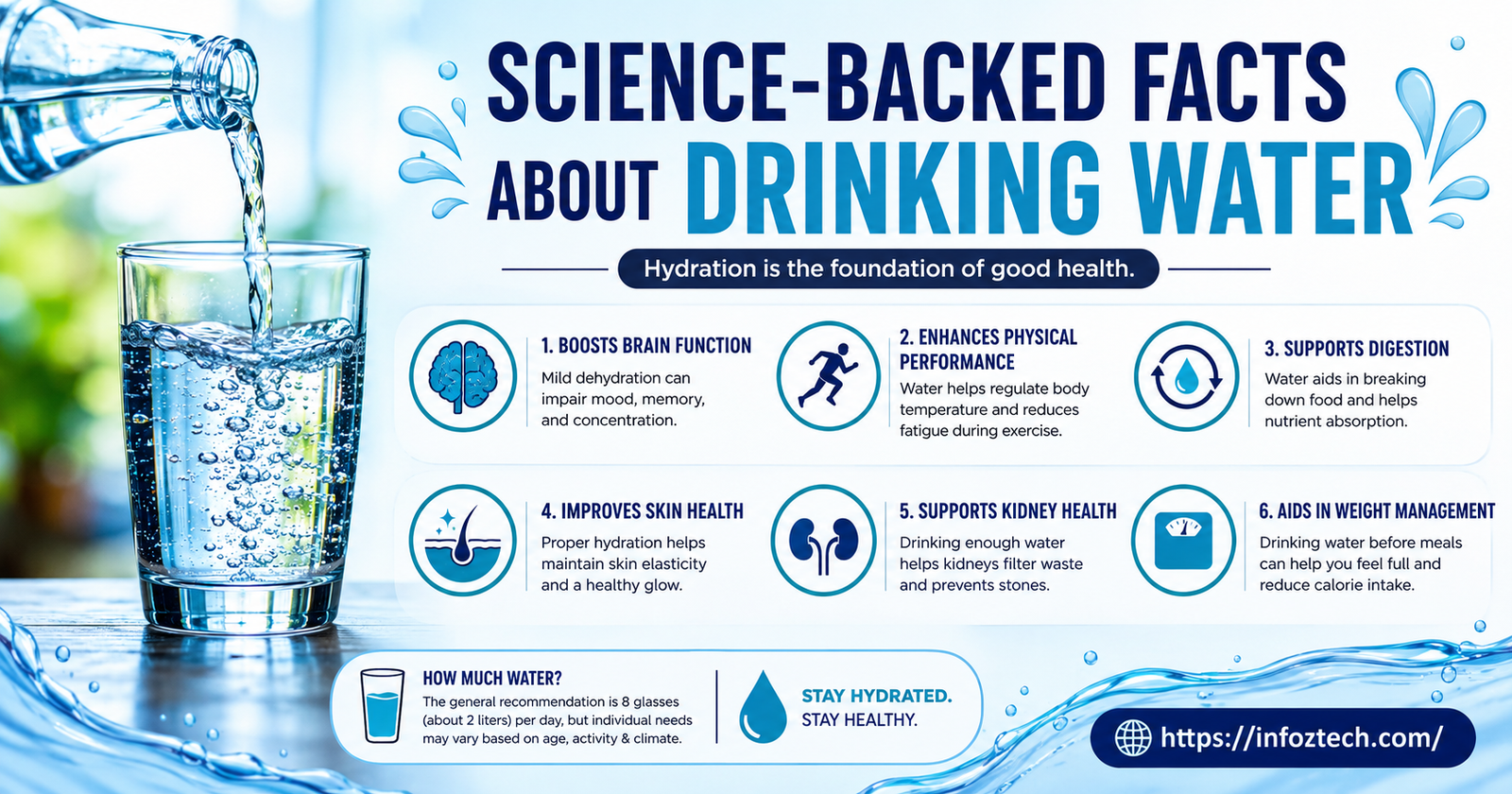

Okay so. I used to keep a water bottle on my desk, refilled it maybe once a day if I remembered, told myself that counted as “staying hydrated,” and then got confused every single afternoon around 3 pm when a headache showed up like clockwork. Turns out — and I only found this out later, from a doctor who looked mildly unimpressed with my one-bottle-a-day routine — that’s a textbook mild dehydration pattern. Nobody tells you this stuff in school. You just get the eight-glasses thing drilled into you and move on with your life.
So here’s what the actual research says. Not the recycled advice. The real studies, the ones with actual numbers attached.
Some of this will confirm what you already figured. Some of it’s going to be mildly annoying, because it means a rule you’ve followed for years, maybe decades, was never really backed by much of anything.
Why Water Runs the Whole Show in Your Body
Water isn’t just one ingredient among a bunch of others. It’s closer to the foundation everything else gets built on. Most people don’t think about it at all until something’s already gone wrong: a headache, dizziness, whatever.
It Makes Up Most of You. More Than You’d Guess, Probably
Adults are somewhere between 50 and 60 percent water by weight. That number bounces around based on age, sex, how much muscle you’re carrying versus fat, because muscle holds more water than fat does. Blood, about 90 percent water. Brain and heart tissue, above 70 percent. And bones — which you’d picture as dry, solid, chalky almost — are close to 30 percent water. I didn’t believe that one at first either.
Not just a dinner-party fact. It’s actually why losing even a little fluid shows up fast in how you feel, physically and mentally both.
It’s Basically the Delivery Truck for Everything Else
Nutrients don’t magically end up where they need to go. Water hauls glucose, amino acids, minerals, all of it, to your cells, then hauls the waste back out through urine and sweat. Cut that supply short and the whole system slows down. You’ll feel it: foggy head, tired legs, way before you’d ever actually call yourself “dehydrated.”
How Much Water Do You Actually Need?
Everybody wants a single clean number for this. I get it, I wanted one too. There isn’t one, though- not really.
The 8×8 Rule Was Never Really a Rule to Begin With
Eight glasses, eight ounces each. Catchy. Rhymes, sort of. Easy to remember, which is probably the whole reason it stuck around this long. But it never came from any rigorous study — nobody ran an experiment and landed on that number. Real needs shift with body size, activity, climate, even altitude apparently, which surprised me.
The National Academies of Sciences, Engineering, and Medicine puts total daily fluid intake, food included, at roughly 3.7 liters for men and 2.7 liters for women. Food included. Read that twice if you have to, not just what you’re pouring into a cup.
Food Covers More Ground Than Most People Realize
Something like 20 to 30 percent of daily water intake comes from food alone, not drinks. Watermelon. Cucumbers. Oranges. Soup. Basically water wearing a food costume. So a person eating a lot of produce might genuinely need less plain water than someone living off crackers and takeout containers.
Exercise and Climate Change: the Math, Fast
Sweat a lot during a workout, or just live through a brutal summer, and fluid needs climb, sometimes double what a sedentary indoor day would require. Bigger body generally means more water needed too, more tissue to maintain. None of this is exact. It’s a range, and you adjust as you go, kind of by feel, honestly.
What Happens When You Don’t Drink Enough
Dehydration isn’t just that uncomfortable thirsty feeling. There are measurable effects, and they show up before anything becomes a real medical emergency.
Even Mild Dehydration Messes With Your Brain, More Than People Realize
Studies on mild dehydration — meaning fluid loss around 1 to 2 percent of body weight, which honestly isn’t much — found real, measurable drops in concentration, alertness, and short-term memory. Mood takes a hit too. Research on young women showed more reported fatigue and tension, plus worse performance on attention tasks, once mild dehydration set in.
Here’s the part that actually gets me. A 1 to 2 percent deficit is easy to hit without ever feeling classically “thirsty.” It just feels like being a little foggy. A little slower. The kind of thing people blame on being tired and move on from, never connecting it back to the glass of water they skipped at lunch.
Physical Performance Drops Before You Feel Genuinely Thirsty
Athletes, researchers have documented reduced endurance, strength, and reaction time, all tied to dehydration. Around 2 percent fluid loss, performance decline gets pretty consistent no matter what kind of activity you’re doing. And the thirst signal lags behind the actual loss. So waiting until you feel parched during a hard workout? Not exactly a great strategy.
Your Kidneys Are Quietly Doing Damage Control All Day Long
Kidneys handle fluid balance, filter waste out of your blood- constant background work you never notice. Chronically low water intake gets linked, in study after study, to higher risk of kidney stones and urinary tract infections. Concentrated urine gives minerals more of a shot at crystallizing, gives bacteria a friendlier place to sit around in. Enough hydration dilutes all that, flushes out whatever would otherwise settle in and cause problems down the line.
The Benefits That Actually Hold Up Under Scrutiny
A lot of hydration claims floating around online stretch way past what evidence actually supports. So here’s what’s solid, what survives an actual look at the research.
Digestion and Regularity
Water helps break food down and keeps things moving through your digestive tract. Not drinking enough is a well-documented contributor to constipation — the colon starts pulling water from waste material when the rest of the body’s running short elsewhere. Harder stool. Harder to pass. That’s really the whole mechanism.
Joint Cushioning
Cartilage, the stuff cushioning your joints, is mostly water. Staying hydrated supports that water content, along with the synovial fluid lubricating joints, and some studies have tied chronic dehydration to more joint discomfort. Though I’ll say this needs more research before anyone claims a clean cause and effect here. It’s suggestive, not settled.
Skin. Sort of. With Some Caveats
Skin hydration research does show a link between fluid intake and skin barrier function, especially in people who started out drinking very little to begin with. But the idea that chugging water transforms your skin overnight, glowing complexion by tomorrow morning, isn’t really backed up. Genetics, sun exposure, actual skincare routine, all of that matters way more than water intake alone.
Weight Management. With a Pretty Big Asterisk
Drinking water before a meal shows up in some studies as a modest way to reduce calorie intake, probably because it adds to that full feeling before you’ve even started eating. Water’s calorie-free too, so swapping soda for water is one of the easier changes available without needing much willpower at all. It’s not a fat-burning miracle; don’t expect that. Just a decent, low-effort trade.
Common Water Myths Worth Dropping Already
Myth: Thirst Means You’re Already Badly Dehydrated
Thirst’s more of an early warning light, not a five-alarm fire. Usually kicks in around a 1 to 2 percent water loss, which is mild, easy to fix, not a crisis by any stretch.
Myth: You Can’t Drink Too Much Water
Overhydration, hyponatremia is the technical term, is rare, but it’s real. Happens when water dilutes blood sodium faster than kidneys can keep up processing the extra fluid. Mostly shows up in endurance athletes chugging huge volumes during long events without replacing electrolytes alongside it. Not really something most people need to worry about day to day.
Myth: Coffee and Tea Don’t Count Toward Hydration
Caffeinated drinks do have a mild diuretic effect, sure, that part’s true. But research shows moderate coffee and tea consumption still contributes positively to overall fluid intake. The diuretic effect is smaller than people assume, and it doesn’t cancel out the water sitting in the cup.
Practical Habits That Actually Work, No Fluff
Attach Water to Something You Already Do
Habit research keeps showing pairing a new behavior with an existing one beats relying on raw willpower, every time basically. Glass of water right after brushing your teeth. Bottle parked next to the coffee maker so you see it before caffeine even happens. Small stuff. But it sticks in a way New Year’s resolutions never do.
Check Urine Color. Not Fancy, But It Works
Pale yellow, you’re generally fine. Dark yellow, drink more, simple as that. Not a perfect system; some vitamins and medications mess with the color regardless of hydration status, but it’s a free daily gut check that takes zero effort.
Adjust Before You’re Thirsty, Not After the Fact
Hot day, hard workout, doesn’t matter which, bump up intake ahead of time rather than waiting around for thirst to show up. That signal lags behind what your body actually needs once you’re exerting yourself.
The Bottom Line
Water isn’t magic. Plenty of claims about it online go further than the evidence actually holds up. But the core stuff is solid: your body’s mostly water, even mild fluid loss measurably messes with brain function and physical performance, and going without enough for too long carries real risk for your kidneys and your digestion. Forget the rigid eight-glass rule, honestly. Pay attention to your own body, your activity level, your climate, and you’ll end up doing better than any one-size-fits-all number could ever manage on its own.



-
-
-
-
-
Show Comments[…] software’s only as good as the rules you give it. Vague convention, vague results — that part’s not […]
[…] number that came back made me put the phone down and just stare at a wall for a second, genuinely unsettled. I hadn’t consciously decided to pick it up that many times. Most of those unlocks […]
[…] few habits quietly wreck the security this whole setup is supposed to […]
[…] 30 micrograms a day for most healthy adults. A bit more if pregnant or breastfeeding. Not a hard target, honestly […]
[…] people assume the internet started as some clean, deliberate design for global communication. Reality’s messier. Way more specific. The early network that eventually became the internet […]