
Introduction
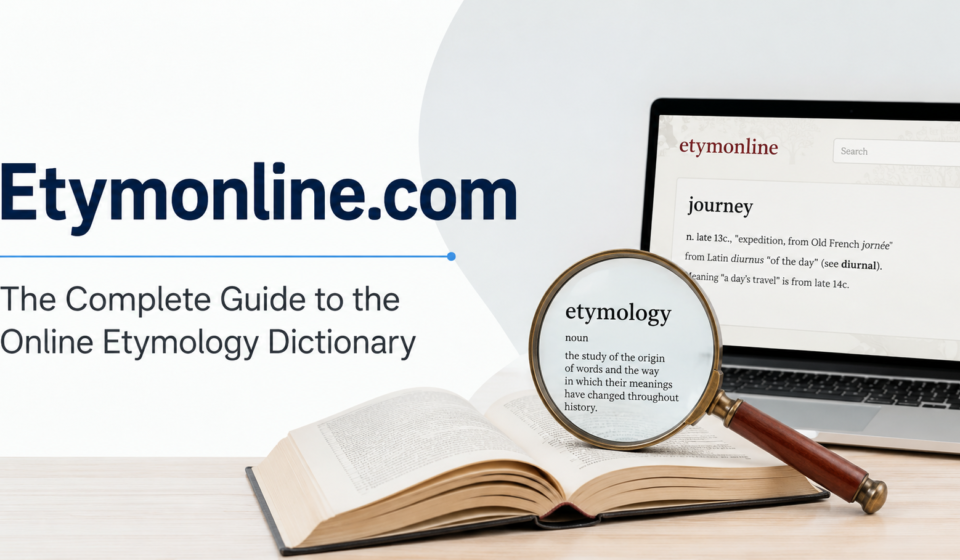
Anyone curious about where English words actually come from eventually stumbles upon etymonline.com. This website, formally known as the Online Etymology Dictionary, has quietly become one of the internet’s most trusted references for word history. Whether you’re a writer chasing the perfect phrase, a student researching language development, or simply someone who wonders why “salary” is connected to salt, etymonline.com offers clear, well-sourced answers. This article walks through what the site is, how it works, and why it remains a go-to resource for anyone interested in the roots of English vocabulary.
What Is Etymonline.com?
Etymonline.com is a free, searchable database dedicated to tracing the origins and historical development of English words. Unlike a standard dictionary that focuses on current definitions, this site digs into where a word came from, how its meaning shifted over centuries, and which languages contributed to its formation.
The project was created by Douglas Harper, who compiled decades of etymological research from established scholarly sources into a single, accessible platform. Rather than requiring readers to consult multiple academic texts, etymonline.com condenses that information into concise, readable entries.
Who Uses the Site
The audience for etymonline.com is broad. Writers use it to add depth and precision to their word choices. Teachers and students use it for language and history lessons. Translators, editors, and even crossword enthusiasts turn to it when they need quick, reliable etymological context. Because the entries are written in plain language rather than dense academic jargon, the site appeals to casual users and serious researchers alike.
How Etymonline.com Organizes Word Origins
Each entry on etymonline.com follows a consistent structure designed to make word history easy to follow.
Entry Format
A typical entry begins with the word itself, followed by its earliest recorded English usage and approximate date. From there, the entry traces the word backward through its linguistic ancestry, often moving through Old French, Latin, Greek, or Proto-Germanic roots, depending on the word’s path into English.
Source Language Breakdown
Entries frequently break down compound origins, showing how prefixes, suffixes, and root words combined over time. This helps readers understand not just where a word came from, but how its individual parts contributed to its current meaning.
Historical Meaning Shifts
Many words have changed meaning dramatically since their first recorded use. Etymonline.com highlights these shifts, noting when a word’s sense narrowed, broadened, or changed entirely due to cultural or historical influences.
Why Etymonline.com Is a Reliable Resource
Etymonline.com draws its content from respected etymological references, including works by scholars who specialize in historical linguistics. This grounding in established scholarship separates it from casual word-origin blogs or unverified claims circulating online.
Transparency About Sources
The site is upfront about its reliance on foundational etymological dictionaries, giving users confidence that entries are not speculative. When uncertainty exists about a word’s origin, entries typically note that ambiguity rather than presenting a guess as fact.
Regular Updates
The database continues to be refined and expanded, reflecting ongoing scholarship in historical linguistics. This keeps the resource relevant rather than static.
Practical Ways to Use Etymonline.com
Etymonline.com serves several practical purposes beyond simple curiosity.
Improving Writing and Vocabulary
Understanding a word’s root meaning often clarifies its nuance. Writers use etymonline.com to choose words with precision, especially when subtle differences in connotation matter.
Supporting Language Education
Teachers incorporate etymology into vocabulary instruction because understanding roots helps students remember and correctly use new words. Etymonline.com provides ready-made material for these lessons.
Deepening Historical Understanding
Word origins often reflect broader historical events, trade routes, and cultural exchanges. Exploring etymonline.com can reveal surprising connections between seemingly unrelated words and civilizations.
Conclusion
Etymonline.com has earned its reputation as a dependable, easy-to-use resource for exploring the history of English words. By combining scholarly accuracy with an accessible format, it serves writers, educators, students, and curious readers alike. Whether you’re researching a single word or exploring broader patterns in language development, etymonline.com remains a valuable starting point for understanding how English vocabulary came to be.



[…] well-structured schedule can be the difference between a productive day and a chaotic one. Whether you’re managing work responsibilities, family commitments, or […]
[…] is a gaming blog focused on gaming-related content, such as guides, game overviews, and discussions of gameplay mechanics. […]
[…] is a Romania-based technology company headquartered in Cluj-Napoca. It offers technology strategy and consulting, […]